

Choosing the right filament for 3D printing is one of the most important decisions you will make after buying your printer. The correct filament gives you strong, beautiful, and reliable prints, while the wrong one causes constant failures, wasted time, and frustration.
In 2026, there are so many options available from basic PLA to advanced carbon fiber composites. The key is to match the filament to your project needs, printer capabilities, and workshop environment. This guide will help you choose the right filament every time, whether you are a beginner in the Slate Belt.
Why Filament Choice Matters More Than Ever in 2026
Modern 3D printers have become faster and more reliable. But filament quality and compatibility still determine 70 to 80 percent of your final print success. A mismatched filament can lead to warping, poor layer bonding, stringing, nozzle clogs, or parts that break easily.
On the other hand, choosing the right filament improves print quality, increases durability, reduces failures, and saves both time and money in the long run.
7 Key Factors You Must Consider Before Buying Filament
- Your Project Requirements
What will you print? Decorative models, functional parts, flexible items, or high temperature components?
- Printer Specifications
Check your Hotend maximum temperature, bed heating capability, and whether you have an enclosure.
- Filament Diameter
Most desktop printers use 1.75mm filament. Confirm your printer supports it.
- Ease of Printing
Beginners should start with easy materials like PLA.
- Mechanical Properties
Strength, flexibility, impact resistance, and heat deflection temperature.
- Budget and Availability
Balance performance with cost and choose reliable brands.
- Workshop Environment
Temperature changes, humidity levels, and dust in your garage or basement shop can affect filament performance.
Detailed Filament Comparison (2026)
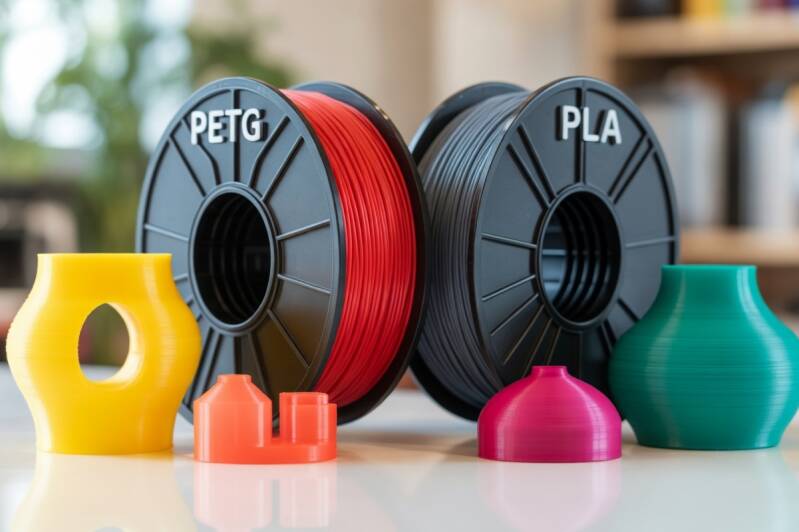
- PLA Filament- Best for Beginners
- Printing Temperature: 190 to 220°C
- Bed Temperature: 50 to 60°C
Pros: Easy to print, excellent detail, vibrant colors, low warping, minimal odor, biodegradable options available.
Cons: Brittle, low heat resistance (softens above 60°C).
Best For: Decorative models, prototypes, toys, and artistic prints.
- PETG Filament – Best All Around
- Printing Temperature: 230 to 250°C
- Bed Temperature: 70 to 90°C
Pros: Strong, good impact resistance, chemical resistant, food safe options available.
Cons: Prone to stringing if settings are not optimized.
Best For: Functional parts, mechanical components, enclosures, and daily use items.
- ABS and ASA Filaments
- Printing Temperature: 240 to 260°C
- Bed Temperature: 90 to 110°C (enclosure recommended)
Pros: High toughness, impact resistant, good post processing. ASA offers excellent UV resistance.
Cons: Warping, strong odor, requires enclosure.
Best For: Outdoor parts, automotive components, and tool handles.
- TPU Flexible Filament
- Printing Temperature: 220 to 250°C
- Bed Temperature: 40 to 60°C
- Pros: Excellent flexibility and shock absorption.
- Cons: Requires slower speeds and careful tuning.
- Best For: Phone cases, gaskets, flexible hinges, and wearable items.

How to Choose the Right Filament for Your Specific Project
Beginners and Decorative Prints→ Start with PLA
Functional and Strong Parts→ Choose PETG
Outdoor or Heat Resistant Parts → Go with ASA
Flexible Parts → Use TPU
High Strength Mechanical Parts → Try carbon fiber reinforced PETG or Nylon
Common Mistakes Makers Make
- Using PLA for functional parts that face heat or stress
- Not drying filament in humid conditions (especially PETG and TPU)
- Ignoring bed leveling when printing flexible TPU
- Buying very cheap filament without checking quality and diameter tolerance
Pro Tips for Better Results in Your Workshop
- Always dry your filament before printing, especially during humid summer months.
- Keep a simple filament log with successful settings for each brand.
- Buy from trusted sellers for consistent diameter and quality.
- Start slow and learn one filament type properly before switching to others.
- Use a hardened steel nozzle when printing carbon fiber or other abrasive filaments.
Choosing the right filament is not about finding the best one in the market. It is about finding the right one for your printer, project, and workshop environment. Most users should begin with PLA, then gradually move to PETG as they gain experience. Match the material to your needs and you will see much better printing results.
Ready to find high quality filament for your next project?
Explore our Filament-store
Still confused about which filament to choose?
Contact us. Our team will happily recommend the perfect filament for your needs.

FAQs
Q1. What is the easiest filament for beginners?
A: PLA is by far the easiest and most beginner friendly filament.
Q2. Which filament is best for functional parts?
A: PETG is the best choice for most functional and mechanical parts.
Q3. Can I use PLA for outdoor prints?
A: No, PLA is not suitable for outdoor use due to low heat and UV resistance.
Q4. How do I prevent stringing in PETG?
A: Proper retraction settings, lower printing temperature, and dry filament help reduce stringing.