

At 3D Creations in Bangor PA we go through a lot of filament every single week. Whether it is Overture PLA, PETG, Glow PLA, Rock PLA, Nylon, or flexible TPU, we see firsthand how quickly filament can go bad if it is not stored properly.
The truth is proper storage makes just as much difference as your printer settings. We have had customers bring us spools that were left open for just a few weeks in our humid Pennsylvania summers, and the difference after drying and correct storage is huge. Fewer stringing issues, better layer adhesion, stronger prints, and much less wasted time and material.
Over the years of running our workshop, we have tested many different storage methods. Some worked okay, some were complete disasters, and a few became our daily standard. In this guide, we are sharing the exact practices we actually use every day to keep our filament fresh and our prints reliable.
Why Filament Storage Is So Important
Most 3D printing filaments are hygroscopic. That means they naturally absorb moisture from the air like a sponge. When you push that moist filament through a hot nozzle the water turns into steam. This causes stringing, bubbles in the print, poor layer bonding, random clogs, and prints that look rough or feel brittle.
Good filament storage is not just about keeping things neat. It directly affects print quality, reduces failed prints, saves money, and gives you consistent results whether you are printing functional parts or artistic pieces.

General Best Practices We Follow Every Day
Here are the core rules we follow in our workshop for every single spool:
- Keep filament in airtight containers or vacuum sealed bags with good quality desiccant.
- Try to maintain humidity below 30 percent, ideally between 15 and 20 percent for sensitive materials.
- Store at normal room temperature between 15 and 25 degrees Celsius and keep away from direct sunlight or heat sources.
- Always label every spool with the filament type, color, and the date it was opened.
- Follow first in first out so older filament gets used before newer stock.
These simple habits have saved us from countless headaches.
How We Store Different Types of Filament
PLA Filament (including Overture PLA, Matte PLA, Glow PLA, Rock PLA)
PLA is the most beginner friendly and forgiving filament, but it still absorbs moisture over time. We keep our entire stock of Overture PLA in sealed dry boxes. This way customers can walk into our shop and pick up fresh filament anytime from our filament store.
PETG Filament
PETG is noticeably more sensitive to moisture than PLA. We always store it in airtight containers with plenty of desiccant. If a spool has been exposed to air for more than a few days, we dry it at 60 to 70 degrees Celsius for six to eight hours before printing.
Nylon and Flexible Filaments (TPU)
Nylon and TPU absorb moisture extremely fast. We never leave these materials open even for a short time. We keep them in vacuum sealed bags or active dry cabinets at all times.
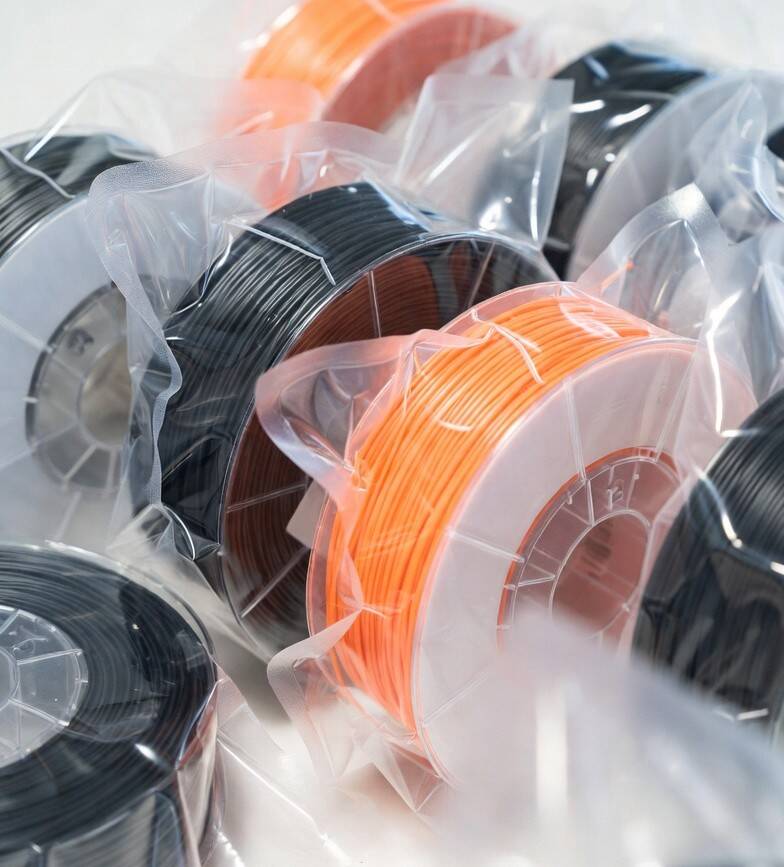
Our Favorite Storage Solutions
In our workshop we use a combination of three main systems:
- Active filament dry boxes with built in fans and hygrometers
- Vacuum sealed bags with reusable desiccant packets for long term storage
- Dedicated filament dryers for spools that have already absorbed moisture
In addition to desiccant, an even better solution for Bambu Lab users is the Sunlu AMS Heater. It can be added right to the automatic filament feeder to dry the filament as it is printing.
These simple tools have saved us from countless failed prints and have become an essential part of our daily workflow.
If you want to see the exact filaments, scanners, and storage tools we personally use and recommend in our workshop you can check our recommended affiliate products page.
Common Mistakes We See Customers Make
- Leaving filament sitting on the printer for weeks between prints
- Storing filament in the original open cardboard box
- Using cheap zip-lock bags instead of proper airtight containers
- Keeping filament near windows, kitchens, or humid basements
Avoiding these mistakes alone can dramatically improve your print success rate.

Taking a few extra minutes to store your filament properly makes a massive difference in your print quality and saves you time and money in the long run. Whether you are just starting out with your first printer or you run a busy workshop like ours, consistent storage habits pay off every single day.
At 3D Creations we follow these practices every day so we can offer reliable 3D printing services and fresh, high-quality filament to our local customers in Bangor PA and the Slate Belt area.
If you are ever unsure about the best way to store a specific filament or need help choosing the right storage solution for your setup, feel free to contact us anytime. We are always happy to share what actually works in real life.